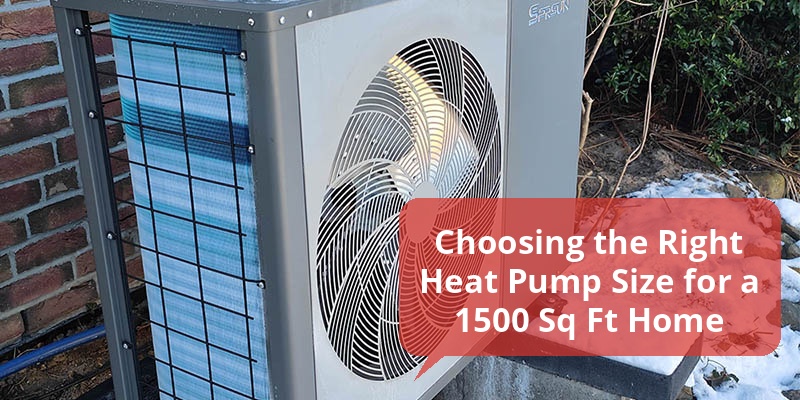
Selecting the appropriate heat pump size for a 1500 square foot home is crucial for achieving optimal comfort and energy efficiency. An incorrectly sized heat pump can lead to insufficient heating or cooling, increased utility bills, and wear on the system. This article guides homeowners and HVAC professionals through the factors affecting heat pump sizing, recommended capacity ranges, and tips for proper installation tailored to a 1500 sq ft living space.
| Home Size (Square Feet) | Recommended Heat Pump Capacity (Tons) | Approximate BTU Output Needed |
|---|---|---|
| 1500 Sq Ft | 1.5 to 2.0 Tons | 18,000 – 24,000 BTU/hr |
Understanding Heat Pump Capacity and its Importance
Heat pump capacity is measured in tons, where one ton represents the ability to move 12,000 British Thermal Units (BTU) of heat per hour. For a 1500 sq ft home, choosing the right heat pump size usually ranges between 1.5 to 2.0 tons. This capacity ensures sufficient heating and cooling without wasting energy.
Oversizing leads to frequent cycling that reduces efficiency and lifespan, while undersizing results in inadequate temperature control and increased strain on the system. Proper sizing balances comfort and energy savings, making it a key factor in heat pump installation.
Factors Affecting Heat Pump Size for a 1500 Sq Ft Home
Climate and Geographic Location
The heating and cooling demands differ significantly between colder and warmer regions. Homes in colder climates require heat pumps with higher heating capacity to compensate for heat loss. Conversely, milder climates may allow for smaller units.
Home Insulation and Construction Quality
A well-insulated home reduces heating and cooling load, allowing for a smaller heat pump size. Older or poorly insulated homes need larger units to maintain comfort. Upgrades like double-pane windows or air sealing impact sizing calculations.
Ceiling Height and Layout
The volume of air to heat or cool depends on ceiling height. Standard 8-foot ceilings are often assumed in sizing; higher ceilings or open floor plans increase capacity needs. Zones and room distribution also influence heat pump performance.
Occupancy and Internal Heat Gains
More occupants and electronic devices generate additional heat, potentially reducing heating demand but increasing cooling needs. This factor is often considered in professional Manual J load calculations for precise sizing.
Estimating Heat Pump Size: Manual J Load Calculations
The most reliable method for determining heat pump size is performing a Manual J load calculation. This detailed assessment measures:
- Building materials and insulation levels
- Window types and solar gain factors
- Air infiltration rates
- Local climate data
- Household habits and occupancy
Certified HVAC professionals use this method to recommend a heat pump size tailored to the home’s specific characteristics, ensuring optimal performance and energy efficiency.
General Heat Pump Sizing Guidelines for 1500 Sq Ft Homes
| Square Footage | Typical Heat Pump Capacity | BTU/hr |
|---|---|---|
| 1200 – 1500 Sq Ft | 1.5 to 2.0 Tons | 18,000 – 24,000 |
| 1500 – 1800 Sq Ft | 2.0 to 2.5 Tons | 24,000 – 30,000 |
Energy Efficiency Ratings to Consider
When choosing a heat pump, it’s important to evaluate efficiency ratings to reduce operational costs:
- SEER (Seasonal Energy Efficiency Ratio): Higher SEER values reflect more efficient cooling performance.
- HSPF (Heating Seasonal Performance Factor): Indicates heating efficiency; the higher, the better.
For a 1500 sq ft home, opting for a heat pump with a SEER rating of at least 16 and HSPF above 8 offers a good balance of performance and savings.
Heat Pump Types Suitable for a 1500 Sq Ft Home
Air-Source Heat Pumps
These are the most common type, suitable for moderate climates. They transfer heat between indoors and outdoors and offer both heating and cooling efficiently. Modern models perform well even in temperatures below freezing.
Ground-Source (Geothermal) Heat Pumps
Though costlier upfront, geothermal heat pumps provide superior efficiency by utilizing constant underground temperatures. They are ideal if the property permits installation and if long-term energy savings are prioritized.
Ductless Mini-Split Heat Pumps
Excellent for homes without ductwork, mini-splits allow zoned heating and cooling. For a 1500 sq ft home, multiple indoor units can be installed to match individual room requirements and improve energy control.
Professional Installation and Maintenance Tips
- Hire licensed HVAC professionals to perform accurate sizing and installation.
- Ensure refrigerant lines and ductwork are properly sealed to maximize efficiency.
- Schedule annual maintenance to keep the system operating at peak performance.
- Consider programmable thermostats for energy savings and comfort customization.
Common Mistakes to Avoid When Sizing a Heat Pump
- Relying solely on square footage without factoring climate and insulation.
- Choosing the cheapest option rather than sizing for efficiency and longevity.
- Ignoring professional load calculations which lead to oversizing or undersizing.
- Neglecting regular maintenance which can mimic symptoms of improper sizing.
Summary Table: Key Considerations for Heat Pump Size in 1500 Sq Ft Homes
| Consideration | Impact on Heat Pump Size |
|---|---|
| Climate | Colder climates need larger capacity heating; milder climates can use smaller units. |
| Insulation | Better insulation reduces load, allowing smaller heat pumps. |
| Ceiling Height | Higher ceilings increase heating/cooling volume, requiring larger units. |
| Occupancy | More people and electronics increase cooling demand. |
| System Type | Air-source vs geothermal affects initial size and efficiency. |