Introduction
Choosing a reliable heater for well houses, pump rooms, and other utility spaces is essential to protect equipment from freezing and to maintain steady temperatures. The following 5 models combine built‑in thermostats with robust construction to help you monitor and control warmth in remote or utility settings. This article highlights each option’s thermostat features, safety considerations, and installation notes to help you compare performance and choose a solution that fits your space.
| Product | Brand | Best Use | Thermostat Type |
|---|---|---|---|
| AEGONAN Utility Heater with Built-In Thermostat | AEGONAN | Pumphouses, utility rooms | Built-in digital thermostat |
| Qmark WHT500 Utility Heater | Fahrenheat | Well houses, pipes | Thermostat with control box |
| TRUSTECH Greenhouse Heater with Thermostat | TRUSTECH | Greenhouses, workspaces | Built-in thermostat |
| LHUKSGF Greenhouse Heater with Thermostat | LHUKSGF | Greenhouses, patios | Thermostat with multiple outputs |
| SHinic Space Heater with Thermostat | Shinic | Utility rooms, garages | Thermostat; multiple heat settings |
AEGONAN Utility Heater With Built-In Thermostat

Brand: AEGONAN. This 600W electric pump house heater is designed for freeze protection in pump houses, utility rooms, relay stations, and similar spaces. It features no moving parts to wear out, enabling reliable year‑round operation in remote locations. The built‑in thermostat and digital display allow straightforward temperature control, with a range of 40°F to 105°F. Heat transfer is enhanced by X‑shaped aluminum fins for faster, more even warming, helping maintain stable temperatures and reduce energy waste.
Qmark WHT500 Utility Heater for Well Houses

Brand: Fahrenheat. This 500W unit is designed for use in well houses and utility spaces to protect pipes and equipment from freezing. It uses a durable galvanised steel enclosure to endure exposure to varied temperatures and environmental conditions. The thermostat is housed inside a control box for tamper resistance and continuous operation, providing around‑the‑clock protection and reliable temperature maintenance in harsh climates.
TRUSTECH Greenhouse Heater With Thermostat
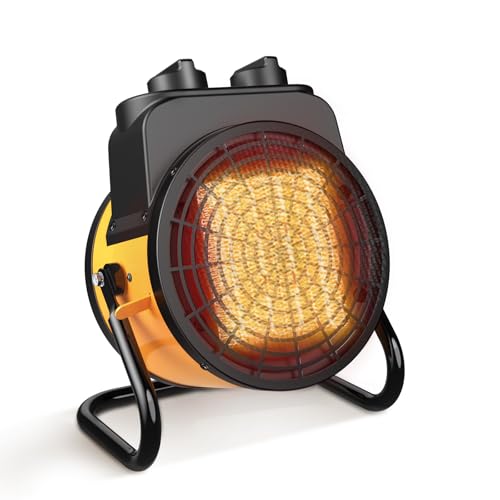
Brand: TRUSTECH. A 1500W outdoor electric heater with three heat modes and a built‑in thermostat, designed for greenhouses and workshops. It includes overheat protection and ETL certification for safety. The unit offers a 90° tilt adjustment to direct heat where most needed, making it suitable for varied layouts and ensuring consistent warmth in plant beds or equipment rooms during cold spells.
LHUKSGF Greenhouse Heater With Thermostat
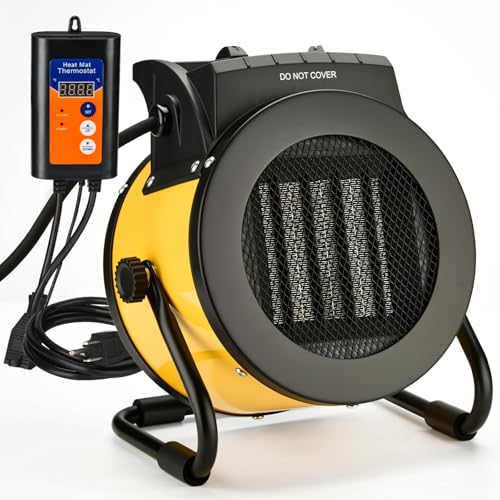
Brand: LHUKSGF. This outdoor heater provides precise climate control with multiple modes (20W/750W/1500W) for greenhouse or patio use. It features instant PTC ceramic heating, delivering fast heat and efficient operation. IPX4 waterproof rating supports outdoor or semi‑exposed installations, and the thermostat enables stable temperature settings across changing conditions.
SHinic Space Heater With Thermostat

Brand: Shinic. 1500W milkhouse style heater with thermostat, built for durability in garages, greenhouses, and utility spaces. It features a three‑prong plug, overheat protection, tip‑over auto shutoff, and a carry handle for portability. The unit’s robust metal housing supports prolonged use in demanding environments while maintaining safe, controlled warmth.
Buying Guide: Key Purchase Considerations
- Space and heater capacity: Match wattage to the space. Larger areas or outdoor spaces require higher wattage (e.g., 750–1500W), while smaller pump houses may handle 500–600W.
- Thermostat reliability: Look for digital or well‑sealed thermostats with a clear display and a wide range. Tamper‑resistant enclosures help protect settings in industrial spaces.
- Protection features: Overheat protection, tip‑over safety, and weatherproofing (IP ratings) are essential for outdoor or damp environments.
- Durability and enclosure: Metal housings and galvanised steel or rugged plastics improve longevity in challenging locations like pump houses and greenhouses.
- Heat distribution: Models with enhanced fins, convection fins, or adjustable tilts direct heat efficiently to critical areas and reduce energy waste.
- Installation considerations: Fixed installations in utility rooms vs. movable units in garages. Consider cord length, mounting, and ventilation requirements.
- Remote control and smart options: Some units offer app control or remote sensing. Weigh convenience against compatibility with existing systems.
- Safety certifications: ETL/UR certifications, IP ratings, and compliance with local electrical codes help ensure safe operation over time.
- Maintenance: Fewer moving parts generally reduce maintenance. However, periodic checks of thermostats and electrical connections remain important in remote locations.
Additional Perspectives
- Remote operation: For pump houses, a thermostat with stable control reduces risk of freeze damage and minimizes energy use when equipment is idle.
- Indoor vs. outdoor placement: Outdoor-rated heaters with weather resistance provide reliability but require appropriate venting and clearance from combustibles, if applicable.
- Energy efficiency: Choose models with programmable schedules or multiple heat settings to adapt to seasonal needs, balancing comfort with operating costs.
- Safety tradeoffs: Some models prioritize compact design over advanced features. Assess whether your priority is space savings or maximum protection.
- Durability in harsh environments: For utility spaces prone to moisture or dust, consider sealed enclosures and solid mounting options to prolong service life.