Discover top picks for efficient, space-saving heaters that optimize energy use and provide targeted warmth. This guide highlights five strong choices that align with energy-conscious shopping, including solar-ready or energy-efficient models designed for indoor comfort, small spaces, or sheltered outdoor areas. Each option is evaluated on heat output, safety, ease of use, and smart features to help you pick the right heater for offices, bedrooms, workshops, or greenhouse spaces.
| Product | Key Features | |
|---|---|---|
| Dreo Space Heater (B0C6FCKQML) | Dreo | Hyperamics 1500W PTC, 5 modes, 12H timer, thermostat, remote, tilt protection |
| Solar Heater for Greenhouse (B0FVF8W9FD) | Generic | Solar-powered setup, battery/USB outputs, outdoor-friendly heater kit |
| Comfort Glow Oscillating Parabolic Heater (B0DDCY5RP9) | Comfort Glow Portable Electrics | 1000W radiant parabolic heat, 33% energy savings, 70° oscillation |
| FLANUR Space Heaters (B0FLL3K1V4) | FLANUR | 4 modes, 1500W PTC ceramic, WiFi/voice control, ECO mode, 70° oscillation |
| GiveBest Portable Electric Space Heater (B07W4SN7N7) | GiveBest | Two heat levels, thermostat, automatic safety shutoff, tip-over safety |
Note: This article focuses on indoor-use options with strong energy efficiency, safety features, and user-friendly controls. Prices are not included, and product availability may vary by retailer.
Dreo Space Heater With Thermostat And Remote

Dreo offers a compact smart heater designed for rapid warmth. Its Hyperamics 1500W PTC system delivers heat quickly, with a heat funnel design that improves air distribution for extended reach. The unit includes a tilt-detection sensor for enhanced tip-over protection and uses ETL-certified materials with overheat protection. A precise thermostat (41–95°F in 1°F steps) helps manage energy use, while a remote and 12-hour timer provide convenient scheduling. The 70° oscillation option helps spread warmth across small to medium rooms, making it suitable for offices and bedrooms.
Key considerations: This model emphasizes safety and precise temperature control, making it a strong choice for users who want reliable, adjustable warmth without manual adjustments. Noise level is typical for ceramic heaters, which is acceptable for most bedroom or office settings. Energy-conscious users should explore ECO or low-power modes to maximize efficiency during extended use.
Solar Heater For Greenhouse
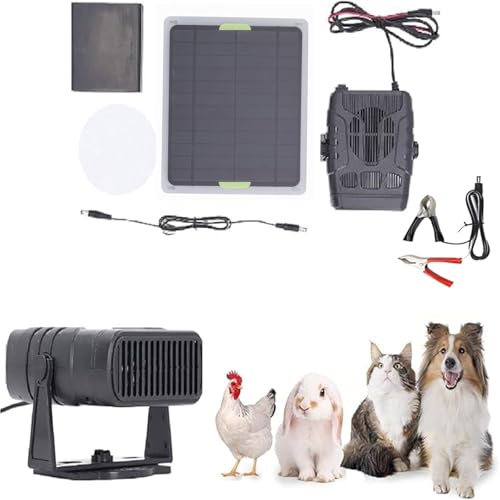
This solar-powered heater is designed for outdoor and semi-outdoor warming, suitable for greenhouses, chicken coops, and pet shelters. It comes with a solar panel, a battery compartment, and dual USB outputs to charge devices, supporting versatility beyond heating. The construction uses monocrystalline silicon PET for durability in variable weather, offering a renewable-energy approach to keeping small spaces warmer with minimal running costs. The kit supports de-icing and cold-weather readiness in outdoor settings, making it a practical option for solar-powered warmth in greenhouse environments.
Key considerations: Solar-based heating requires appropriate sun exposure and may be less consistent on cloudy days. It’s best as a supplementary heat source or in configurations where charging and ambient solar energy can contribute meaningfully. This option diversifies energy sources and can reduce reliance on traditional electricity, which may appeal to eco-conscious buyers and hobby farmers.
Comfort Glow Parabolic Radiant Space Heater

This radiant parabolic heater focuses warmth where you need it, using a 1000W carbon element that heats quickly for instant comfort. The unit emphasizes energy efficiency by delivering targeted warmth while consuming less energy than typical 1500W heaters. An adjustable tilt feature helps direct heat toward seating areas, making it a solid choice for indoor spaces like living rooms or home offices where localized heat is desirable. Overheat and tip-over protections contribute to safe operation in daily use.
Key considerations: Radiant heating provides fast warmth but can feel warmer at a distance only in the direction of the reflector. It works well for spot heating in smaller rooms. For larger areas, pairing with a secondary heater or using it as a supplemental heat source may be beneficial.
FLANUR Smart Space Heater With App And WiFi

FLANUR presents a smart 1500W PTC ceramic heater with four operation modes, including an ECO setting. It supports WiFi control via the Havaworks app and is compatible with voice assistants like Alexa and Google Home. The 12-hour timer enables scheduled heating, and a vivid LED display shows current temperature for easy monitoring. A 70° oscillation helps distribute warmth evenly, while safety features include flame-retardant materials, overheat protection, auto shutoff after 24 hours, and a child lock. The heater operates on 2.4GHz WiFi, which is typical for many smart devices.
Key considerations: Smart control adds convenience and potential energy savings through scheduled usage. Ensure your home WiFi supports 2.4GHz networks, and consider room size to determine if this heater will provide adequate coverage. ECO mode can further reduce energy usage when full power isn’t needed.
GiveBest 1500W Portable Electric Heater

GiveBest combines two heat settings (1500W or 750W) with a thermostat for automatic cycling. The unit can deliver warmth to spaces up to around 200 square feet and includes automatic safety shutoff for overheating and tip-over protection. A compact design with a built-in carry handle makes it portable for desks, offices, or bedside tables. The thermostat helps maintain stable temperatures with less energy waste, especially in smaller rooms or drafty spaces.
Key considerations: The dual-heat option supports flexibility across seasons. For large open areas, consider larger square footage or supplementary heating. The build emphasizes safety and portability, which is valuable for temporary or temporary-use spaces, such as dorm rooms or home offices.
Buying Guide: Key Purchase Considerations
- Room size and heat needs: For small spaces, 750–1000W models with good heat distribution can suffice. Larger rooms may require 1500W units or multiple heaters to avoid overworking a single device.
- Energy efficiency: ECO or auto-thermostat modes help maintain comfortable temperatures while reducing energy use. Look for features like programmable timers and precise temperature control.
- Safety: Prioritize tip-over protection, overheat protection, flame-retardant materials, and certified electrical safety. A built-in thermostat and auto shutoff enhance safe, continuous use.
- Smart features: WiFi/app control and voice compatibility can improve convenience and allow scheduling. Ensure your network supports the required frequency (often 2.4 GHz).
- Portability vs. placement: Consider whether you need a compact unit for a desk or a larger heater for a living space. Some models offer oscillation to spread warmth more evenly, which is useful in multi-seat rooms.
- Power source considerations: Solar-assisted or solar-ready options exist, but consistency depends on sun exposure. For indoor-only setups, traditional electric heaters with energy-saving modes are typically more reliable.
- Durability and weather use: Outdoor or semi-outdoor heaters require weatherproofing and sturdier casings. Indoor heaters prioritize quiet operation and decorative fit with room aesthetics.
- Maintenance: Look for easy-to-clean grills and durable materials. Check for filter or vent maintenance guidelines if applicable.
Overall, the best solar or energy-conscious heater choice will balance room size, safety features, and control convenience. For greenhouse or solar-ready setups, pairing a solar kit with a compact heater can extend warmth while reducing grid dependence. For indoor spaces, prioritize ECO modes, precise thermostats, and reliable safety protections to maximize comfort and efficiency.