The following selection highlights five top propane space heaters suited for garages, workshops, patios, and living spaces where electricity may be unreliable or unavailable. Each option offers strong safety features, portability, and solid heat output. Use this guide to compare BTU ranges, coverage area, and installation options to find the best fit for your space and needs.
| Product | Brand | BTU | Heats Up To | Best Use |
|---|---|---|---|---|
| Gasland MHA18BN Propane Radiant Heater | GASLAND | 18,000 | 450 sq. ft. | Ventilated garages and workshops |
| ProCom ML100TBA-B Ventless Space Heater | ProCom | 10,000 | 500 sq. ft. | Home office and living spaces |
| ProCom ML300TBA-B Ventless Space Heater | ProCom | 28,000 | 1,400 sq. ft. | Large rooms and open-plan areas |
| Habitio 125,000 BTU Forced Air Propane Heater | Habitio | 125,000 | 3,125 sq. ft. | Job sites, garages, and construction spaces |
| ThermoMate PHF18B Propane Heater | thermomate | 18,000 | 450 sq. ft. | Patios, garages, outdoor spaces |
Gasland MHA18BN Propane Radiant Heater

The Gasland MHA18BN provides portable radiant heat designed for ventilated spaces. It operates on liquid propane and includes a compact cabinet with an integrated tank location, keeping the appearance neat while delivering reliable warmth. It features a tip-over shut-off and low-oxygen shut-off for safety, which helps protect users in semi-enclosed work areas. The unit is designed to be moved easily, with built-in wheels and a handle, making it suitable for garages, workshops, and construction sites. It is a no-electricity-required solution, helping reduce energy costs when electrical power is unavailable or limited. Installation is straightforward, and its heat focuses on objects and occupants rather than heating the entire room. This model is well-suited for users who need quick, directional warmth in a notifying environment.
Key features and considerations include safety shut-offs, portability, and energy independence. Typical run times depend on tank size and load; in practice, it is best used for targeted heat rather than dialect heating large, enclosed spaces for extended periods. For safety, ensure proper ventilation and follow manufacturer guidance on clearance from combustibles.
ProCom ML100TBA-B Ventless Propane Heater

The ProCom ML100TBA-B is a compact ventless blue flame heater that provides 10,000 BTU and heats up to about 500 square feet. This unit is designed for indoor residential use, offering thermostat control with High/Medium/Low settings to maintain a comfortable environment. Its slim and modern profile allows for easy placement on the floor or wall mounting with included hardware, and its lightweight construction supports portability between rooms. A practical option for offices or smaller living spaces, where quiet operation and straightforward temperature control are valued.
Operational notes include the need for proper ventilation and adherence to safety guidelines, particularly for enclosed spaces. The thermostat helps regulate warmth without overshooting, making it a good fit for living areas, studios, or small bedrooms where electric heating may not be ideal or available.
ProCom ML300TBA-B Ventless Propane Heater

The ProCom ML300TBA-B offers a higher heat output, delivering up to 28,000 BTU to heat spaces up to 1,400 square feet. With thermostat control, users can set High/Medium/Low to tailor warmth to the room size and comfort preferences. The unit supports wall mounting or placement on floors with included base feet, maintaining flexibility in room layout. Its blue flame design emphasizes efficient heat transfer, making it a strong option for larger living areas, workshops, and commercial-like spaces where consistent warmth is needed without relying on electrical power.
Careful installation and regular checks for gas connections are essential. This model suits environments requiring robust heat output, particularly in spaces without access to central heating or in semi-outdoor conditions where warmth must reach further areas efficiently.
Habitio 125,000 BTU Propane Heater
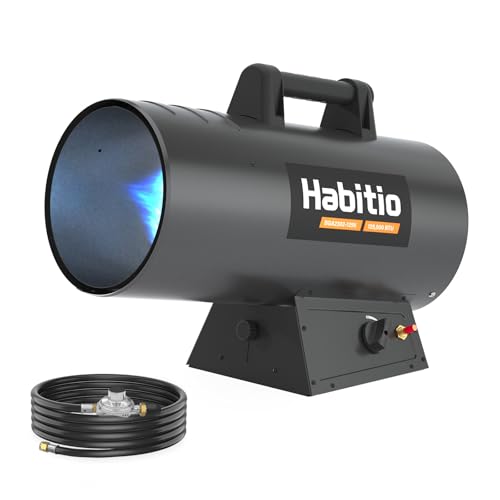
The Habitio forced-air propane heater is designed for large spaces and job sites, offering an impressive 125,000 BTU output with coverage up to 3,125 square feet. It is a portable torpedo-style unit with a 10-foot hose and regulator included, enabling flexible placement and quick warmth across expansive areas like garages, workshops, and construction sites. The heater uses a pulse ignition system for reliable starts and includes safety features such as overheat protection and automatic shutdown in case of power loss. CSA certified, it provides a robust solution for environments requiring rapid and substantial heat delivery.
Note that higher BTU units require careful placement and adequate ventilation. This heater is best suited for non-residential, larger-scale applications where robust heat output is essential and where safety protocols for gas-fired equipment are followed.
ThermoMate PHF18B Propane Heater

The ThermoMate PHF18B is an 18,000 BTU cabinet heater designed for outdoor patios, garages, and camping setups, featuring three heating modes (6000/12000/18000 BTU) for flexible warmth across 450 square feet. It includes a regulator and hose, enabling straightforward setup with a standard propane supply. The unit emphasizes portability and a compact footprint, with casters allowing easy movement around a workspace or yard. ODS and tip-over protection enhance safety for mixed-use environments and semi-outdoor spaces where wind and weather can affect heating efficiency.
Users should assess ventilation requirements and ensure that outdoor-facing installations are protected from rain and direct moisture. The multiple heat settings provide precise comfort control for varying weather conditions and occupancy levels.
Buying Guide: Key Considerations For Propane Space Heaters
- Heat output and area: Match BTU ratings to space size. Larger spaces require higher BTU units (e.g., 28,000 BTU to heat 1,400 sq ft; 125,000 BTU for 3,125 sq ft).
- Ventilation and safety: Propane heaters require adequate ventilation to prevent buildup of exhaust. Look for oxygen depletion sensors (ODS), tip-over switches, and overheat protection.
- Portability vs. installation: Cabinet or torpedo-style designs offer portability, while wall-mounted units save floor space. Consider mounting hardware and caster wheels for movement.
- Running requirements: Some units use no electricity, while others may rely on or benefit from electrical connections for fans or automatic controls. Plan for power availability in your workspace.
- Thermostat control: Thermostatic models help maintain a consistent temperature and may reduce fuel consumption by avoiding constant full-heat operation.
- Fuel supply: Ensure compatibility with standard 20-lb propane cylinders or larger tanks as required. Check hose length and regulator compatibility for safe operation.
- Durability and CSA approval: For frequent or job-site use, select heaters with CSA certification and robust construction to withstand rough environments.
- Noise levels: Some units run quietly, while forced-air models can produce audible operation. If indoor placement is a concern, prioritize lower-noise options.
- Maintenance: Regular inspection of connections and hoses helps prevent leaks. Follow manufacturer guidelines for storage and winterization when not in use.
Purchase considerations should reflect space type (indoor vs. outdoor), expected occupancy, and safety requirements. For durable, high-heat needs in large or semi-outdoor spaces, a high-output model like Habitio or a sub-20,000 BTU cabinet heater may balance warmth with energy efficiency. For smaller rooms or offices, models such as ProCom ML100TBA-B or ThermoMate PHF18B offer compact sizing with adequate control. Always follow local codes and manufacturer instructions to ensure safe operation.