Choosing a propane hanging garage heater involves balancing heat output, safety, ease of installation, and ongoing operating costs. This guide highlights five top options, including ceiling-mount capable units and versatile infrared designs, to help you compare performance and fit for your space. The selections cover both natural gas–powered and propane-fueled models, with a focus on garage, workshop, and outdoor-adjacent environments.
| Product | BTU / Coverage | Fuel | Mount Type | Notable Feature |
|---|---|---|---|---|
| Mr. Heater F260560 Big Maxx MHU80NG | 80,000 BTU | Natural Gas | Vertical / Ceiling venting | Large area coverage up to 2000 sq ft |
| DR Infrared Heater DR-238 | 900–1500 W (infrared) | Propane (LP) optional via setup | Portable/indoor-outdoor capable | IP55 rated for indoor/outdoor use |
| Mr. Heater F260550 Big Maxx MHU50NG | 50,000 BTU | Natural Gas | Ceiling-friendly venting | Heats up to ~1250 sq ft |
| Reznor UDXC-60 | 60,000 BTU | Propane | Ceiling mount or wall heater (mounting sold separately) | High efficiency; commercial-grade |
| InoKraft MaXheat MH125 | 125,000 BTU | Propane | Portable/stackable options | Fast heat, wide area coverage |
Mr. Heater Big Maxx MHU80NG — 80,000 BTU Natural Gas Unit Heater
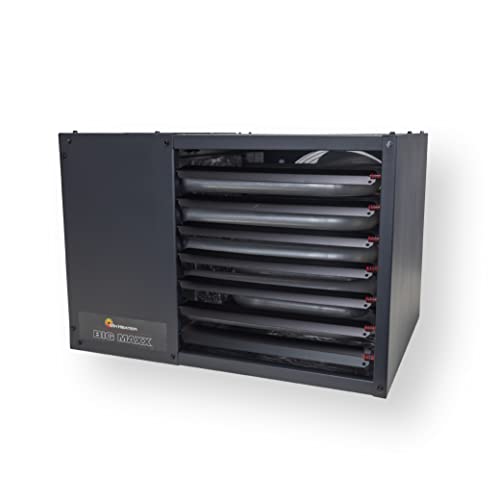
The Mr. Heater F260560 Big Maxx MHU80NG is designed for large spaces, delivering up to 80,000 BTU for efficient garage heating. It is a natural gas unit with vertical venting, well-suited for garages with existing gas support. The unit’s dimensions are substantial, and it requires a minimum 8-foot clearance from floor to base. The kit includes two angle brackets and a liquid propane conversion kit, though a thermostat, hose, and regulator are not included. This model targets spaces up to 2000 square feet, making it a strong choice for larger workshops or garage bays where ceiling mounting is feasible and venting is available.
Key considerations: ensure proper venting, confirm natural gas availability, and plan for safe clearance around combustibles. Electrical supply is 120 V with a low current draw (about 2.3 amps) for most installations. As with any high-BTU heater, professional installation is recommended to verify gas line compatibility and venting compliance.
DR Infrared Heater DR-238 Carbon Infrared Outdoor Heater
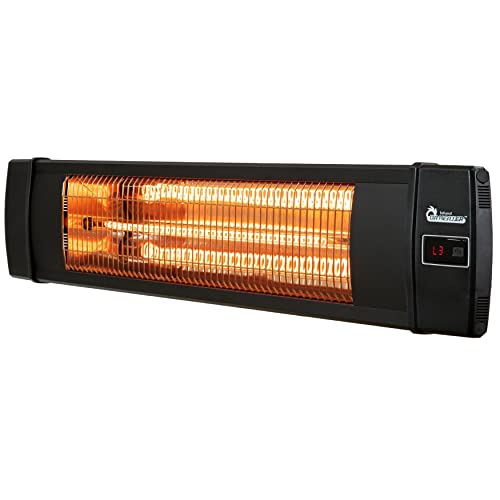
The DR-238 is a carbon infrared heater designed for both indoor and outdoor use, featuring IP55 protection for weather resistance. It offers clean, instant heat with three power settings: 900W, 1200W, and 1500W, operating on standard 120V power. While marketed for outdoor patios, decks, garages, and restaurants, its infrared heat warms objects and people directly, which can be advantageous for partially ventilated spaces. A remote control adds convenience, and the unit’s compact profile makes installation flexible for ceiling or wall mounting where allowed by local codes.
Considerations: infrared heaters provide quick warmth with less airflow, but they rely on line-of-sight heating. In busy garages, ensure safe mounting height and protect from direct exposure to potential impact. Overall suitability depends on space layout and whether outdoor-grade protection is desired inside or outside the structure.
Mr. Heater Big Maxx MHU50NG — 50,000 BTU Natural Gas Unit Heater
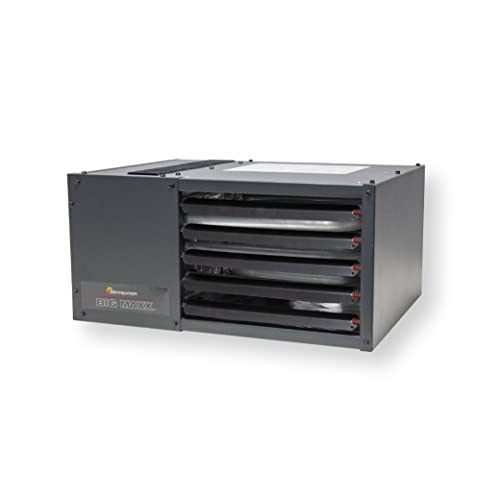
This 50,000 BTU unit from Mr. Heater provides solid heating for mid-sized spaces up to about 1250 square feet. With powered exhaust for vertical or horizontal venting, it offers flexible installation, especially in garages with existing venting pathways. Accessibility is improved by easy outside access to thermostat and gas connections, simplifying maintenance and adjustments. It’s a practical balance between power and footprint for standard garages or shop bays where ceiling installation is preferred.
Important points: verify venting requirements and clearances. This model emphasizes straightforward service access, and 120V electrical supply is typical for control operations. For larger spaces or higher heat demands, pairing with additional units or higher-BTU models might be needed.
Reznor UDXC-60 Propane Garage Heater — 60,000 BTU

The Reznor UDXC-60 is designed for indoor use with propane fuel, suitable for workshops, garages, warehouses, and similar spaces. It provides 60,000 BTU with a focus on high thermal efficiency (up to about 83%). The unit is intended to be ceiling-mounted or used as a wall heater, with mounting sold separately. It is positioned as a reliable commercial-grade option that blends robust heat output with flexible mounting configurations. Ceiling mounting is common in garages with tall ceilings or open bays where heat distribution benefits from overhead placement.
Key considerations: ensure proper mounting hardware is used and that the space has adequate ventilation and clearance. Installation and service typically require professional oversight to meet safety and code requirements for propane appliances.
InoKraft MaXheat MH125 — 125,000 BTU Propane Forced Air Heater

The InoKraft MH125 delivers 125,000 BTU of forced air heat for large garages and job sites, capable of heating up to about 3200 square feet. It features automatic 25–95°F On/OFF control for convenient operation and includes a 10-foot hose. This portable option is suitable for shops, car garages, and temporary job sites where flexible heat delivery is important. The heater is CSA certified and emphasizes quick warm-up times, along with a robust safety profile that includes overheat protection and gas shutoff features. The wide BTU range makes it a strong option for drafty spaces or high-ceiling garages.
Considerations: portability is a plus, but ensure fuel supply logistics and appropriate ventilation. For long-term installations, assess whether a permanently mounted option with consistent venting is preferable to a portable unit for safety and energy efficiency.
Buying Guide: Key Considerations For Propane Hanging Garage Heaters
- Heat Output vs. Space: Calculate the required BTU based on garage size, ceiling height, insulation, and climate. Higher BTU units are better for large, uninsulated spaces, but excessive output can waste energy if not properly matched to the space.
- Fuel Type and Venting: Decide between natural gas and propane. Propane units often require more careful ventilation planning and fuel logistics, while natural gas models depend on gas line availability. Ceiling-mounted installations must align with venting requirements and building codes.
- Mounting And Clearance: Ceiling-mountable models improve heat distribution in open garages, but ensure adequate clearance from combustibles and a safe installation height. Mounting kits and brackets may be sold separately, so verify included hardware.
- Ventilation And Safety: Look for units with protective features such as oxygen depletion shut-off, tip-over protection, and overheat protection. A well-ventilated space reduces risks associated with combustion byproducts.
- Installation Simplicity: Some models require professional installation to connect gas lines and venting properly, while others offer simpler setups. Consider long-term maintenance accessibility and serviceability.
- Operating Costs: BTU efficiency, fuel costs, and usage patterns influence total cost of ownership. Infrared models provide direct heat with potentially lower air movement, which can be advantageous in drafty spaces.
- Durability and Environment: Outdoor-rated or weather-resistant units suit garages with exposure to the elements, while indoor-rated designs optimize safety and efficiency for enclosed spaces.
- Noise and Comfort: Forced-air models may generate more fan-related noise. Infrared heaters, though quiet, heat objects rather than air, which can affect air temperature perception.
- Maintenance: Verify availability of replacement parts, ease of cleaning, and the accessibility of control components. Some units offer straightforward thermostat and gas connection access for updates.
- Code Compliance: Ensure compliance with local building codes, ventilation requirements, and safety standards. When in doubt, consult a licensed HVAC professional for installation and permit needs.