When choosing a horizontal venting garage heater, it’s important to consider venting options, BTU output, fuel type, and installation requirements. This guide highlights reliable gas-fired units that vent horizontally, making them suitable for garages, workshops, and commercial spaces that need efficient, space-saving heat. Below, you’ll find a curated selection with practical details to compare performance and compatibility.
| Product | Brand | BTU | Venting | Notes |
|---|---|---|---|---|
| Big Maxx MHU50NG | Mr. Heater | 50,000 | Horizontal | Natural gas, compact for smaller spaces |
| Big Maxx MHU80NG | Mr. Heater | 80,000 | Horizontal / Category 3 | Versatile for larger garages |
| UDXC-150 (Natural Gas) | 1HVAC | 150,000 | Horizontal | Commercial-grade performance |
| UDXC-150 (Propane) | 1HVAC | 150,000 | Horizontal | Propane version, high heat output |
| UDXC-45 | 1HVAC | 45,000 | Horizontal | Compact option for small to medium spaces |
style=”display:none”>Product Highlights
style=”display:none;”>This summary table provides a quick reference to the five selected horizontal-venting garage heaters, focusing on BTU rating, venting type, and fuel compatibility to help with side-by-side comparisons.
Mr. Heater Big Maxx MHU50NG: 50,000 BTU Natural Gas Heater
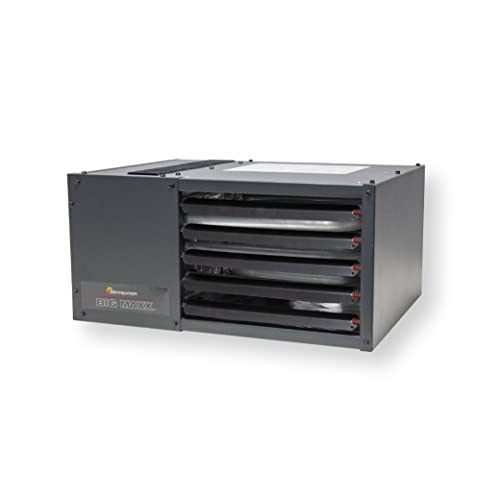
The Big Maxx MHU50NG delivers 50,000 BTU per hour to heat up to about 1,250 square feet. It features a powered exhaust system enabling horizontal venting from an outside vent location and provides easy access to thermostat and gas connections for service or adjustments. This model is well-suited for smaller to medium garages that require reliable warmth with straightforward installation.
Key points: natural gas operation, horizontal venting capability, external access for thermostat and gas connections. Suitable for spaces where venting through an exterior wall is preferred.
Mr. Heater Big Maxx MHU80NG: 80,000 BTU Natural Gas Heater
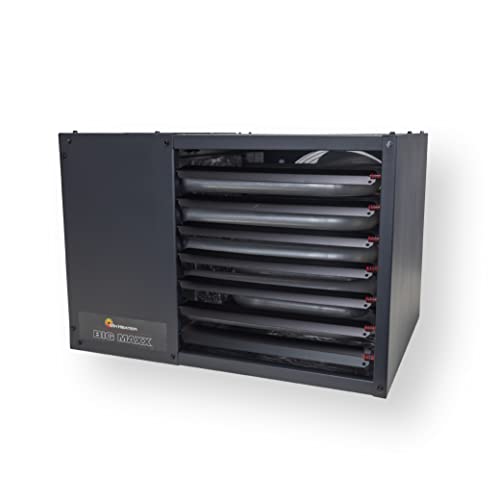
The 80,000 BTU Big Maxx model is designed for larger spaces, delivering robust heat with flexible venting options. It notes horizontal or vertical venting compatibility, and the package indicates included brackets and a natural gas configuration. It’s a solid choice for garages that demand sustained warmth in colder months.
Highlights include a high-heat output for bigger areas, category 3 venting considerations, and external thermostat access for convenient control from outside the space.
UDXC-150 Natural Gas: Reznor Ceiling-Mount Garage Heater

Reznor’s UDXC-150 gas heater offers 150,000 BTU with an 83% thermal efficiency rating. Designed for indoor commercial or industrial spaces like garages or workshops, this unit is mounted to the ceiling or used with appropriate brackets. It’s built for demanding environments and heavy usage scenarios.
Key considerations include its forceful heat output, ceiling-mount versatility, and the ability to adapt to horizontal venting with the correct kit and installation.
UDXC-150 Propane: Reznor Horizontal Venting Unit
The propane version of the UDXC-150 provides a parallel heat output of 150,000 BTU with efficient performance for indoor applications. It’s compatible with ceiling or wall mounting setups, depending on the bracket and installation. Suitable for spaces requiring propane fuel and substantial heating capacity.
Considerations include fuel type flexibility, high BTU capacity, and the need for appropriate propane commissioning and ventilation components per installation standards.
UDXC-45: Reznor 45,000 BTU Unit for Indoor Garages
The 45,000 BTU model offers a lower-output option ideal for smaller spaces or zones where a full 100,000+ BTU unit would be excessive. It supports horizontal venting and is designed for indoor installation in garages, workshops, or similar settings. As with larger models, mounting and ventilation requirements should align with local codes.
Important factors include moderate heat capacity, ease of installation, and compatibility with ceiling suspension and horizontal venting configurations.
Buying Guide
Key considerations when selecting a horizontal venting garage heater include space size, insulation quality, ceiling height, and local venting requirements. Gas-fired units typically require proper ventilation, clearances, and professional installation.
- BTU and space coverage: Match the unit’s heat output to the garage size. Larger spaces benefit from higher BTUs, but avoid wasting energy in smaller spaces.
- Venting options: Horizontal venting allows venting through exterior walls, which helps keep the heater out of the workspace. Confirm compatibility with your building’s venting path and local code constraints.
- Fuel type and efficiency: Natural gas units tend to be economical, while propane versions offer flexibility in locations without natural gas lines. Look for models with high thermal efficiency for better fuel economy.
- Installation and clearance: Ceiling or wall mounting requires adequate clearances from combustibles and secure mounting hardware. Some models include brackets or require separate mounting kits.
- Control and maintenance: Thermostat access, service accessibility, and ease of filter or component maintenance contribute to long-term reliability.
- Noise and airflow: Propeller or forced-air fans can influence noise levels and airflow patterns. For quiet operation, review decibel ratings and ducting considerations.
- Safety and compliance: Ensure units meet applicable safety standards and installation codes. Consider professional installation for gas lines and venting.
When comparing options, weigh the balance of heat output, venting flexibility, and installation practicality. For larger workshops or commercial spaces, higher BTU units like the 150,000 BTU models provide substantial warmth but require careful placement and dedicated venting. For smaller garages, 50,000 to 80,000 BTU units typically offer efficient performance with simpler installation. Always verify that venting kits, mounting brackets, and gas connections are included or readily available for your chosen model.