Choosing an electric tankless water heater can improve efficiency and provide limitless hot water for homes with varying demands. The following five models highlight reliable performance, self-modulating technology, and space-saving design suitable for American households. Read on to compare flow capacity, installation needs, and energy considerations to find the right unit for your home.
| Product | Brand | Approximate Flow (GPM) | Notes |
|---|---|---|---|
| Rheem 18kW 240V Tankless Electric Water Heater, Gray | Rheem | Up to 4.4 | Advanced self-modulation, durable elements |
| 14kW Tankless Water Heater Electric, ORBEK 240V | Orbek | Up to 3.38 | LED display, ETL Certified |
| EcoSmart ECO 11 Electric Tankless Water Heater | EcoSmart | Up to 0.9-1.3 (typical) | Self-modulating, compact |
| 18kW Tankless Water Heater Electric, ORBEK 240V | Orbek | Up to 4.17 | Two-pole breakers, fast hot water |
| Rheem RTEX-24 24kW 240V Electric Tankless Water Heater | Rheem | 4+ GPM | Adjustable temperature, multiple breakers |
These selections emphasize practical flow for typical households, clear installation requirements, and energy-saving features. The following sections provide deeper details for each model and a buyer’s guide to help you choose the best fit for your hot water needs and electrical setup.
Rheem 18kW 240V Tankless Electric Water Heater
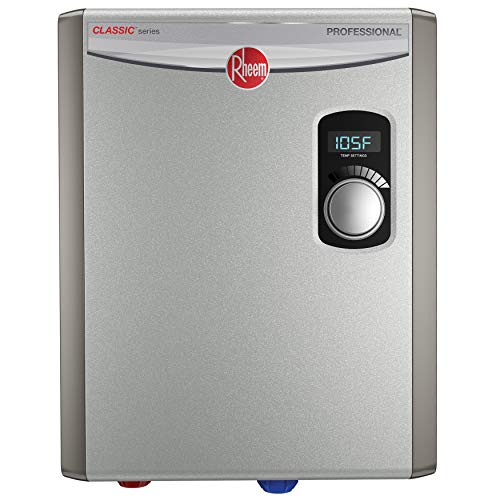
Rheem’s 18kW model delivers reliable on-demand hot water with a digital LED display and precise +/-1 degree control. Its external thermostatic control supports self-modulation to adjust power to meet demand, reducing energy waste. The unit uses durable copper immersion heating elements and offers field serviceability for easier maintenance. With a flow rate up to 4.4 GPM, it is suitable for small to mid-sized homes or point-of-use setups where space and efficiency matter. Installation requires adequate 240V power supply and appropriate circuit protection, but the compact form makes it a strong candidate for retrofit installations in tight spaces.
The system’s self-modulating design helps maintain consistent water temperature as demand changes, contributing to energy efficiency. Users should confirm their home’s electrical panel capacity and wire gauge before purchase. The Rheem unit blends straightforward operation with robust construction, making it a common option for residential use where reliable hot water is needed without a storage tank.
14kW ORBEK Tankless Electric, 240V

This Orbek model is a 14kW, 240V on-demand unit designed for 2-3 point-of-use fixtures. It features a LED digital display for easy temperature control and is ETL certified for safety and compliance. Installation notes emphasize a 240V/60A two-pole breaker, 6 AWG wiring, and 1/2″ NPT water connections to ensure proper electrical and plumbing fit. The heater provides up to 3.38 GPM, delivering efficient hot water for smaller homes or bathrooms where hot water is needed at multiple points without a traditional tank. The unit’s energy strategy focuses on minimizing scale and corrosion through water-electrical separation, which can help electricity costs compared to non-modulating systems.
Consider this model if your hot water demand centers around a couple of fixtures or a compact space where minimal footprint and straightforward wiring are priorities. As with all electric tankless heaters, verifying electrical service capacity, panel space, and local code requirements is essential before installation.
EcoSmart ECO 11 Electric Tankless Water Heater

The EcoSmart ECO 11 is a compact, self-modulating tankless heater rated at 13KW at 240V. It is designed for space-saving installation and can be mounted on a wall or used at the point of use. The self-modulating technology reduces energy use by heating water only when needed, leading to significant energy savings. It is notably smaller than traditional tank heaters, making it suitable for apartments or smaller homes. The unit can deliver up to approximately 1 GPM to 1.5 GPM depending on inlet water temperature, which often translates to consistent hot water for 1-2 points of use. The system’s efficiency and simple installation make it a popular choice where space and cost are key considerations.
Potential buyers should assess their peak hot water needs and climate: in colder water regions, a single ECO 11 may be better suited for a single fixture rather than whole-house use. This model is frequently chosen for replacing a small storage tank or for use in conjunction with other heating strategies in multi-use spaces.
18kW ORBEK Instant On-Demand Water Heater
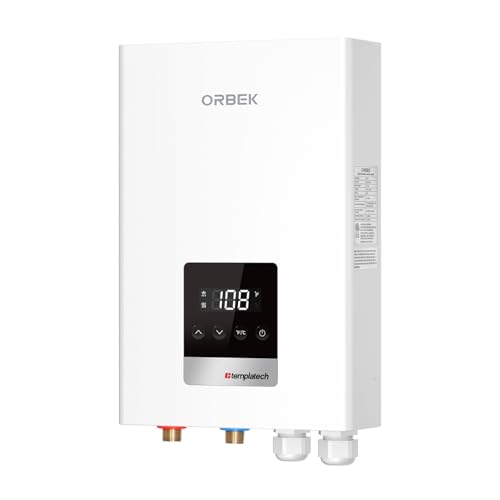
Orbek’s 18kW model is designed for higher demand, delivering up to 4.17 GPM to supply 2-3 fixtures simultaneously. It requires two 240V/40A two-pole breakers and two sets of 8 AWG wires, plus 3/4″ NPT water connections. The unit emphasizes quick hot water—often within seconds—and uses water-electrical separation to minimize scale and corrosion. This model targets homes that require reliable hot water at multiple points without a storage tank, while also emphasizing energy efficiency and reduced electricity costs compared to traditional heaters. Installation should ensure the electrical service can support the higher amperage and adequate space within the breaker panel.
Choose this unit if your home uses multiple hot water outlets at once or if you want a higher GPM capacity in a compact, modern design. As with any high-capacity electric heater, professional electrical assessment is recommended to ensure code compliance and safe operation.
Rheem RTEX-24 24kW 240V Electric Tankless
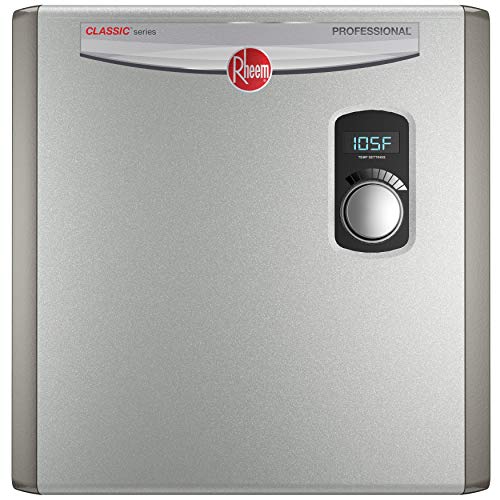
Rheem RTEX-24 is a robust 24kW tankless water heater designed for whole-home hot water with continuous supply. It requires three 40-amp double-pole breakers and a strong 200-amp service recommendation. The installation can demand more space in the electrical panel, but the unit provides reliable performance for higher flow, with a focus on consistent hot water. The temperature is adjustable with an ON/OFF dial and a digital display, allowing precise control from 80 to 140 degrees Fahrenheit in 1-degree steps. Geographic location and groundwater temperature are important factors in predicting actual GPM performance. The model is favored for homes that demand steady hot water across multiple fixtures and can handle higher flow requirements with adequate electrical support.
When considering this Rheem option, homeowners should verify panel space, electrical capacity, and the feasibility of running multiple breakers or dedicated circuits. It’s a strong choice for larger households or scenarios where simultaneous hot water use is common, provided electrical infrastructure is ready for it.
Buying Guide: Key Considerations For Electric Tankless Heaters
- Flow rate needs: Determine the maximum simultaneous hot water demand in GPM for your household, considering showers, sinks, dishwashers, and washing machines. Heaters with higher GPM ratings are better for larger homes or high-use scenarios.
- Electrical service and panel capacity: Most electric tankless heaters require 240V power with multiple breakers. Check your main service amperage and panel space before selecting a unit, especially for models above 18kW.
- Self-modulating technology: Units with self-modulating control adjust energy input based on flow and temperature, improving efficiency and reducing electricity costs.
- Installation location: Consider space constraints, wall-mount options, and proximity to fixtures to minimize heat loss and distribution costs. Compact models suit apartments or retrofit projects.
- Water temperature and climate: In colder climates, the temperature rise needed to reach a comfortable outlet temperature is higher, which can reduce achievable GPM. Plan accordingly.
- Maintenance and serviceability: Field-serviceable elements and accessible cooling and filtration features can simplify upkeep and extend unit life.
- Safety certifications: Look for ETL or similar listings to ensure compliance with electrical standards and safety.
- Cost of operation: While prices vary, consider long-term energy savings from self-modulation and the potential reductions compared to tank heaters or traditional systems.
Each model presented targets different home sizes and electrical configurations. For best results, consult a licensed electrician or HVAC professional to assess your home’s electrical capacity, plumbing fit, and local code requirements before purchasing and installing an electric tankless heater.