Choosing an electric duct heater involves balancing power, compatibility with your HVAC setup, and safety features. The following selections highlight reliable options that integrate with duct or hardwired systems, offering strong heating performance and straightforward controls. The list covers in-duct styles and equivalent ceiling or wall-mounted units designed for garages or workshops, providing clear comparisons to help you decide what fits your space.
| Product | Brand | Power (W) | Best For | Key Feature |
|---|---|---|---|---|
| Warren SL5A 5 KW Electric Duct Heater | Warren | 5000 | In-duct HVAC integration | 24V control for simple operation |
| Supplying Demand HKR-10C 10 kW Kit | Supplying Demand | 10000 | HVAC air handler compatibility | Includes circuit breaker and multiple part numbers |
| TEMPWARE Electric Garage Heater | TEMPWARE | 7500 | Workshop or garage heating | Digital control with ECO mode and timer |
| VEVOR Electric Garage Heater | VEVOR | 10000 | Large-space heating | Remote control, overheat protection |
| BEYOND HEAT Electric Garage Heater | BEYOND HEAT | 750/1500 | Ceiling-mount radiant heating | Dual quartz tubes with 90° tilt |
Warren SL5A 5 KW Electric Duct Heater

The Warren SL5A is a 5 kW duct heater designed for seamless in-duct installation within HVAC systems. Its 24V control simplifies setup and operation, enabling quick adjustments from a building automation perspective. This unit emphasizes rapid heating with a compact in-duct form factor, making it suitable for retrofits in moderate-sized spaces. When integrating into existing ductwork, ensure compatibility with your control system and electrical supply. The design prioritizes reliable heat delivery while maintaining straightforward serviceability for maintenance personnel.
Supplying Demand HKR-10C 10 Kilowatt Electric Heater Kit
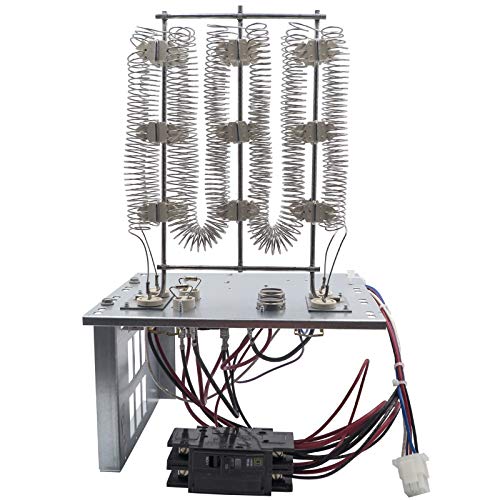
The HKR-10C kit from Supplying Demand delivers a higher-capacity option for HVAC air handler installations, rated at 10 kW. It supports 240V single-phase operation and works with compatible air handlers and control circuitry. The kit includes necessary components such as limit controls and circuit breakers to support safe integration. This option is ideal for larger spaces or ducts that require a more substantial heat input. Review compatibility with your specific air handler model to ensure proper fit and wiring.
VEVOR Electric Garage Heater, 10000-Watt

VEVOR’s 10,000-watt garage heater is a robust option for large spaces, with wall or ceiling mounting to maximize floor-space efficiency. It features remote control and overheat protection, supporting hands-free temperature management. This unit is well-suited for workshops and garages that require sustained heat with reliable safety protections. When selecting a high-wattage heater, verify electrical supply capacity, venting requirements, and mounting clearance to avoid undesired heat exposure to surrounding materials.
BEYOND HEAT Electric Garage Heater

BEYOND HEAT offers ceiling-mount radiant heating with two 750/1500W settings via dual quartz tubes. This design targets localized warmth directly to occupants and objects, which can improve perceived comfort in garages or workshops. The unit includes a safety grille and overheat protection, and the 90-degree tilt feature allows flexible aiming of heat. This option emphasizes targeted warmth and space-saving installation for environments where ceiling-mounted radiators are preferred.
Buying Guide: Key Purchase Considerations
- Heater type and installation: In-duct units integrate with existing HVAC ductwork, while garage and ceiling-mount heaters offer alternative placements for spaces without ducted systems. Choose based on space layout and existing infrastructure.
- Power and electrical requirements: Make sure your electrical service and wiring can support the heater’s wattage and voltage (commonly 240V in HVAC applications). High-wattage units may require dedicated circuits and professional installation.
- Control and safety features: Look for 24V or digital controls, thermostat integration, overheat protection, and safety enclosures. Remote controls and programmable timers can improve energy efficiency.
- Heat output and area coverage: Match BTU or wattage to the room size. Larger spaces demand higher output, but overheating risks and zone control should be considered for comfort and efficiency.
- Installation considerations: Check for compatibility with your existing air handler, duct size, mounting options, and required clearances. Some units include circuit breakers or limit controls for safer operation.
- Durability and certifications: ETL or similar approvals validate safety. Durable housings and corrosion-resistant components are beneficial in garages and workshops.
- Energy efficiency: Features like ECO modes, precise temperature control, and intelligent sensors help reduce energy use while maintaining comfort.
- Maintenance access: Choose models designed for easier service and component replacement to minimize downtime and maintenance costs.