Finding an efficient 110-volt (commonly referred to as 120V in North America) electric baseboard heater can keep rooms warm without heavy electrical work. This guide highlights five reliable options, drawn from popular models, to help you compare performance, safety, and installation ease. Each product below includes a quick snapshot and a link to the official Amazon listing for quick reference. The selections emphasize steady convection heat, simple wiring, and safety features suitable for typical American homes.
| Product | Voltage | Wattage | BTU (approx.) | Brand |
|---|---|---|---|---|
| KING 4K1210BW K Series Baseboard Heater | 120V | 1000W | ~3400 BTU | KING |
| Cadet F Series 72″ Electric Baseboard Heater | 120V | 1500W | ~5100 BTU | Cadet |
| Cadet F Series 36″ Electric Baseboard Heater | 240/208V | 750W | ~2560 BTU | Cadet |
| EZ-HEAT 1,500 Watt Baseboard Heater | 120V | 1500W | ~5100 BTU | EZ-HEAT |
| Comfort Zone 1,500W Baseboard Heater | 120V | 1500W | ~5100 BTU | Comfort Zone |
Note: Electrical needs vary by model and installation—consult a licensed electrician for wiring and circuit requirements. The BTU estimates are approximate and depend on room layout, insulation, and placement of the heater.
KING 4K1210BW K Series Baseboard Heater

The KING 4K1210BW K Series Baseboard Heater is designed for 120V operation with a 1000W rating, delivering steady heat in medium-sized spaces. It uses an aluminum ribbon fin element for efficient heat transfer and includes a full-length safety cutout. This model is best suited for wall mounting and is not a plug-in unit, requiring hard-wiring by a professional. The compact profile helps maintain a low visual footprint in living areas or bedrooms.
Cadet F Series 72″ Electric Baseboard Heater

Cadet’s F Series 72″ baseboard heater operates at 120V with a high output of 1500W, providing robust warmth for larger rooms or open-plan spaces. It emphasizes continuous heat distribution, with simple universal wiring and pre-punched knockouts for straightforward installation. While it’s part of a larger sizing family, this model can be positioned to optimize air convection and avoid cold spots in bigger spaces.
Cadet F Series 36″ Electric Baseboard Heater
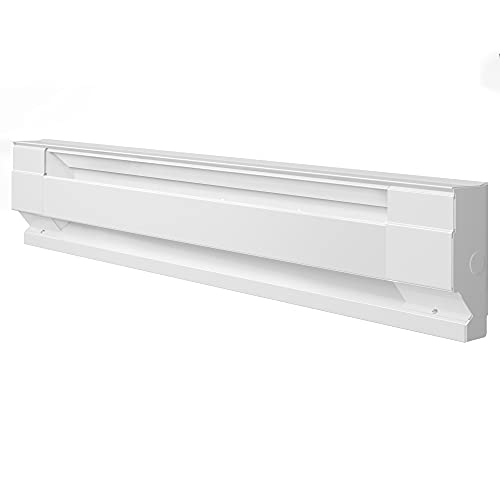
Cadet’s 36″ model features 750W at 240/208V and uses universal wiring with pre-punched knockouts for flexible installation. It’s suitable for zones needing mid-range heat or supplementary warmth in smaller rooms. Its convection-based design helps distribute warmed air through the space, contributing to a comfortable ambient temperature without loud operation.
EZ-HEAT 1,500 Watt Baseboard Heater

EZ-HEAT’s CZ600 model delivers 1500W of heating at 120V with adjustable thermostat, designed for medium-sized rooms. It features a stay-cool body, overheat protection, a tip-over switch, and dent-proof end panels. The unit focuses on safety and reliability while offering flexible temperature control and straightforward installation for homeowners upgrading older bases.
Comfort Zone Electric Baseboard Heater CZ600

The Comfort Zone CZ600 offers 1500W of heat at 120V with features similar to the EZ-HEAT model, including a rugged construction, adjustable thermostat, a tip-over switch, and stay-cool housing. It aims to deliver consistent convection heating across medium-sized rooms while maintaining safety features that protect occupants and property.
Buying Guide: Key Purchase Considerations
- Voltage and circuit compatibility: Most home baseboard heaters operate at 120V, but some models are listed for 240V or 208V. Confirm your home’s circuit capacity and ensure the heater you choose matches your wiring setup or hire a licensed electrician for installation.
- Wattage and room size: Higher wattage yields more heat. Match the heater’s wattage (and the approximate BTU output) to the room’s size, insulation quality, and climate zone to avoid overheating or underheating.
- Wiring method: Look for universal wiring options and pre-punched knockouts for easier installation. Decide between wall-mounted versus freestanding units and ensure the mounting method aligns with your space and safety preferences.
- Convection vs. radiant heat: Baseboard heaters rely on convective heat to circulate warm air. If you need quicker warmth or a quieter operation, consider models with fan-assisted options, though fanless designs tend to be quieter overall.
- Safety features: Prioritize models with overheat protection, tip-over switches, and stay-cool casings to reduce the risk of burns or fires, especially in homes with children or pets.
- Durability and finish: Powder-coated finishes and sturdy enclosures improve longevity and ease of cleaning. White finishes blend with many interiors without drawing attention.
- Noise level: Most baseboard heaters operate quietly, but some variants with fans can introduce subtle sounds. If you need absolute quiet, prefer non-fan, convection-only designs.
- Installation location: Plan for unobstructed airflow along baseboards to maximize convection. Avoid placing heaters behind furniture or heavy drapery that could impede heat distribution.
- Maintenance: Regularly inspect wiring, check for dust buildup on fins, and ensure clear access around the heater for safe operation.
These considerations help balance efficiency, safety, and comfort when selecting a 110-volt baseboard heater for living rooms, bedrooms, or home offices. The models listed above illustrate a range of wattages, sizes, and safety features to fit common American homes without requiring complex electrical work.