Choosing the right commercial unit heater hinges on space size, fuel type, installation flexibility, and energy efficiency. This guide highlights top units that blend performance with reliability, covering natural gas, propane, and electric options. Each model is suitable for warehouses, garages, workshops, or large commercial spaces, helping you maintain consistent warmth year-round.
Summary of Featured Products
| Product | Brand | Fuel | BTU / Watts | Vent/Install Type |
|---|---|---|---|---|
| Mr. Heater F260560 Big Maxx MHU80NG | Mr. Heater | Natural Gas | 80,000 BTU | Vertical Category 1 / Horizontal Category 3 venting |
| Dr. Infrared Heater DR-966 | DR. INFRARED HEATER | Electric | 3000 / 6000 W | Hardwired, wall or ceiling mount |
| Mr. Heater F260550 Big Maxx MHU50NG | Mr. Heater | Natural Gas | 50,000 BTU | Vertical / Horizontal venting |
| Reznor UDXC-150 | 1HVAC | Natural Gas / Propane | 150,000 BTU | Ceiling mount / exposed installation |
| Reznor UDXC-175 | 1HVAC | Natural Gas | 175,000 BTU | Ceiling mount |
Mr. Heater Big Maxx MHU80NG Natural Gas Unit Heater
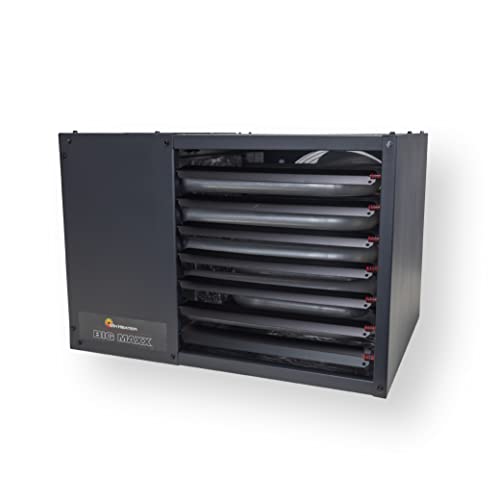
The Mr. Heater Big Maxx MHU80NG is a high-capacity natural gas unit heater designed for larger spaces up to about 2,000 square feet. It operates at 80,000 BTU and features a compact footprint with dimensions around 29.33″ L x 15.50″ W x 26.37″ H. The unit is suitable for vertical venting (Category 1) or horizontal venting (Category 3) and is commonly used in commercial garages and workshops. Note that thermostat, hose, and regulator are not included, so ensure compatible controls and venting accessories are purchased separately.
Key features include a robust output for mid-to-large spaces, a straightforward natural gas connection, and a mounting configuration that supports flexible installation. When sizing, consider clearance requirements (minimum 8 feet from floor to base) to ensure safe operation and proper airflow. This model is well-suited for buildings with existing natural gas lines and venting infrastructure.
DR. Infrared Heater DR-966 240V Electric Unit

The DR-966 is a heavy-duty electric shop heater rated for 3000/6000 watts, ideal for hardwired, electrical-based heating in garages or commercial spaces. It supports wall or ceiling mounting with a bracket included. This unit is designed for spaces that require rapid, targeted warmth without combustion byproducts, making it a clean option for enclosed workshops or welding bays. The 240V operation requires appropriate electrical capacity and circuit protection per local codes.
Mr. Heater Big Maxx MHU50NG Natural Gas Unit Heater
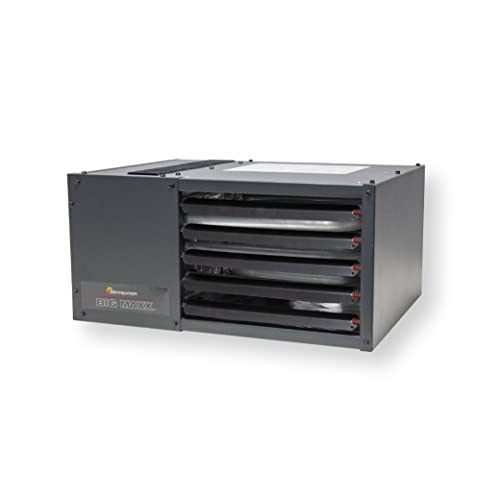
The MHU50NG model from Mr. Heater provides 50,000 BTU per hour and heats up to about 1250 square feet. It features powered exhaust for vertical or horizontal venting and includes accessible exterior points for thermostat and gas connections. This model is a practical option for mid-size garages or workshops where venting flexibility and external control access are advantageous. A separate thermostat and gas line components are typically required for complete installation and control integration.
Reznor UDXC-150 Natural Gas Unit Heater

The Reznor UDXC-150 is a 150,000 BTU natural gas garage heater designed for ceiling mounting in garages, warehouses, and shops. It emphasizes high thermal efficiency (about 83%) and strong heat output for industrial spaces. Suspension points and mounting options are supported by threaded-nut retainers, with mounting kits sold separately. This unit is suitable where ceiling-mounted heating is desired and where substantial airflow and heat distribution are needed over expansive areas.
Reznor UDXC-150 Propane Unit Heater
The Reznor UDXC-150 propane version is designed for indoor propane heating in garages, workshops, or warehouses. Like its natural gas counterpart, it delivers about 150,000 BTU with an 83% efficiency rating. It supports ceiling mounting and uses threaded-nut retainers for suspension, with mounting kits sold separately. This model offers a flexible option for propane-fueled environments or spaces with propane supply lines and ventilation considerations.
Amazon Basics 46,000 BTU Outdoor Propane Patio Heater

The Amazon Basics outdoor propane patio heater delivers 46,000 BTU for outdoor warmth around seating areas and patios. While marketed for outdoor use, it illustrates the range of propane heating options available for various contexts, including commercial hospitality spaces. Features include an easy ignition and mobility for repositioning in outdoor setups, along with wheels for simple relocation. This unit is primarily for open-air environments but demonstrates propane’s versatility in heating strategies.
Reznor UDXC-175 Natural Gas Unit Heater
The Reznor UDXC-175 is a higher-capacity natural gas unit with 175,000 BTU and an 83% thermal efficiency rating. Designed for ceiling mounting, it supports installation in larger shops, factories, or warehouses that require substantial heat output. As with other UDXC models, mounting involves suspension hardware sold separately. This unit is suitable for spaces where maximum warmth is necessary to maintain productive working conditions in cold climates.
Comfort Zone 10,000W Hard-Wired Garage Heater
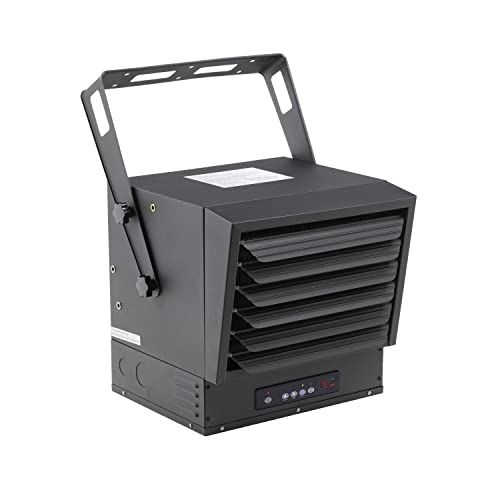
The Comfort Zone 10,000W unit provides a ceiling-mounted, fan-forced heating solution for large spaces requiring robust warmth distribution. With a 240V power rating, it features a remote, digital thermostat, a 12-hour timer, two heat settings, and overheat protection. The design emphasizes efficient heat dispersion and reliable operation in industrial or commercial garages and workshops, offering flexible control for temperature and scheduling in demanding environments.
Buying Guide: Key Considerations For Selecting A Commercial Unit Heater
- Space size and heat load: Calculate the square footage and insulation level. Larger spaces typically require higher BTU outputs (or higher wattage for electric models) to maintain consistent comfort, especially in uninsulated or drafty environments.
- Fuel type and availability: Natural gas and propane models are common for large spaces with existing gas lines. Electric heaters avoid combustion but require appropriate electrical capacity and may be limited by electrical codes and efficiency considerations in very large rooms.
- Ventilation and installation: Gas furnaces need venting and clearance from combustibles. Ceiling mounting is common for ceiling-heat distribution, while vertical or horizontal venting options offer installation flexibility. Ensure access to external venting, gas lines, and thermostat controls.
- Energy efficiency and operating costs: Look for high thermal efficiency ratings (for gas units) and energy-efficient electric models. Consider sustained operation versus intermittent use to estimate energy costs over time.
- Maintenance and serviceability: Check for availability of replacement parts, ease of cleaning intake/exhaust paths, and the practicality of routine maintenance in your space.
- Controls and integration: Digital thermostats, timers, and remote controls improve usability. For commercial settings, consider integration with building management systems or standalone programmable options.
- Noise and airflow: Some units include fans or forced-air mechanisms. Evaluate noise levels and air distribution to avoid creating disruptive working conditions.
- Safety features: Look for overheat protection, proper clearances, and certification marks (UL or equivalent) to ensure safe operation in busy work environments.
For optimal results, match product selection to the space’s heat load, venting capabilities, and electrical or gas supply. Compare models by BTU or wattage, venting flexibility, and installation requirements to identify the best fit for your commercial needs. Always consult with a licensed installer or HVAC professional to ensure compliance with local codes and safety standards.