Choosing the right 110-volt baseboard heater can help maintain comfortable temperatures in small to medium rooms without overpowering your space. The following five options represent reliable, mid-range models that are commonly used in American homes. This guide highlights each heater’s heating output, installation notes, and safety features to help you compare options quickly.
Summary of selected products:
| Product | Brand | Wattage | Voltage | Notes |
|---|---|---|---|---|
| KING 4K1210BW K Series Baseboard Heater | KING | 1000 W | 120 V | Hard-wired, aluminum ribbon fin element |
| Cadet F Series 4F1000W | Cadet | 1000 W | 240/208 V | Universal wiring, safety shutoff |
| Cadet F Series 6F1500W | Cadet | 1500 W | 240/208 V | Higher output, all-metal construction |
| Cadet F Series 3F750-1W | Cadet | 750 W | 120 V | Requires thermostat, durable steel |
| Comfort Zone CZ600 | Comfort Zone | 1500 W | 120 V | Two heat settings, safety features |
KING 4K1210BW K Series Baseboard Heater

The KING 4K1210BW K Series is a 4-foot baseboard heater designed for 1000 watts at 120 volts. It features an aluminum ribbon fin element, which facilitates efficient heat transfer and even heat distribution along the wall. This model is intended for hard-wired installation rather than plugging in, which may suit retrofit projects where a dedicated line is already available. The full-length safety cutout adds a layer of protection, helping prevent overheating in occupied spaces.
Key considerations:
- Best for: medium-sized rooms needing steady, moderate heat at 120 V.
- Installation: Requires hard-wiring; plan for a dedicated circuit if updating wiring.
- Durability: All-metal construction with a continuous heater body for long-term use.
Cadet F Series 4F1000W
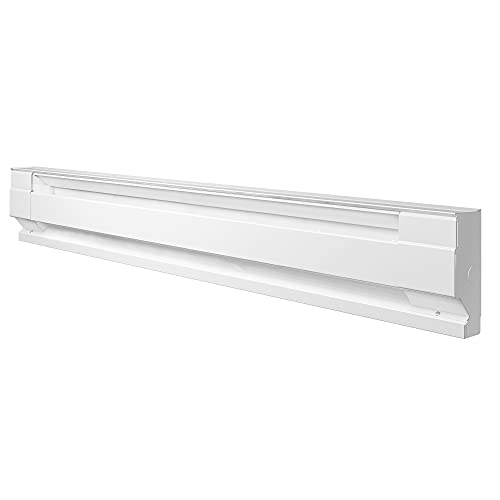
Cadet’s F Series 4F1000W is a 4-foot electric baseboard heater rated at 1000 watts and compatible with 240/208-volt systems. It includes universal wiring and pre-punched knockouts every inch to simplify floor or wall mounting, helping lower installation costs. A high-temperature safety shutoff is included to reduce risk during operation. This model emphasizes flexible wiring options and straightforward installation for modern renovations or new builds alike.
Key considerations:
- Best for: spaces requiring higher voltage operation to reach set temperatures efficiently.
- Compatibility: Suitable for floor or wall installation with simple wiring options.
- Safety: Built-in shutoff protects against overheating and potential hazards.
Cadet F Series 72 in. 6F1500W

The Cadet 6F1500W 72-inch baseboard heater offers a high 1500-watt output suitable for larger zones within a home. This model is built for 240/208-volt systems, delivering strong, consistent heat along a full wall span. It requires a thermostat for operation and uses a robust metal construction to withstand daily use. Installation involves standard baseboard mounting with appropriate electrical connections consistent with Cadet’s engineering for reliability.
Key considerations:
- Best for: larger rooms or spaces requiring higher heat output.
- Installation: Thermostat required for operation; ensure compatible wiring.
- Durability: All-metal design supports long-term performance.
Cadet F Series 3F750-1W
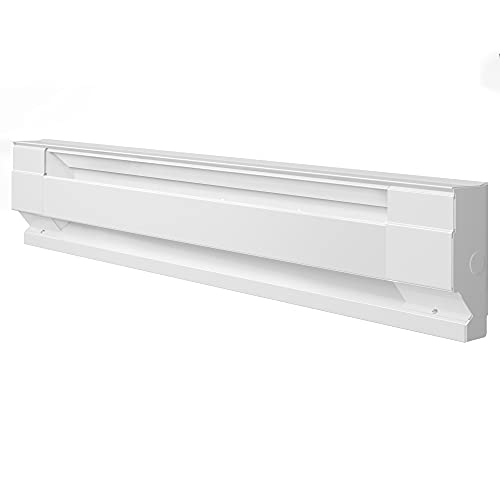
The Cadet 3F750-1W provides a compact 750-watt option for 120-volt systems, ideal for smaller rooms or zones requiring targeted warmth. It features a 25-gauge steel body and a 20-gauge junction box with ground, ensuring durability and straightforward maintenance. This model is all-metal with powder coating, supporting longevity in typical home environments. A thermostat is required for operation, highlighting the need for compatible controls to manage heat output effectively.
Key considerations:
- Best for: smaller rooms or spaces needing consistent, lower-wattage heating.
- Construction: All-metal with powder coating for durability.
- Operation: Requires thermostat to regulate heat.
Cadet F Series 48″ 4F1000-1W
This Cadet 4F1000-1W 48-inch heater provides 1000 watts of heat at 120 volts, making it a solid mid-range choice for bedrooms, offices, or living areas. Pre-punched holes and universal wiring options simplify installation, while a protective steel sheath emphasizes durability and heat transfer efficiency. Note that a thermostat is needed to operate this unit, aligning with common baseboard heater setups that rely on external control for temperature management.
Key considerations:
- Best for: mid-sized spaces that require a steady baseline of warmth.
- Installation: Easy wiring options help reduce setup time and cost.
- Control: Thermostat required to operate the heater.
Comfort Zone CZ600

The Comfort Zone CZ600 offers a 1500-watt convection baseboard heater with adjustable thermostat, designed for medium-sized rooms. It includes a dent-proof end panel design and stay-cool body, plus overheat protection and a tip-over switch for safety. The unit claims whisper-quiet operation to minimize noise disruption in living spaces such as bedrooms or home offices. As a 120-volt model, it fits typical residential circuits and can be paired with standard thermostats for precise control over comfort levels.
Key considerations:
- Best for: medium-sized rooms seeking strong output with safe operation.
- Comfort: Stay-cool exterior and quiet operation support everyday use.
- Safety: Tip-over switch and overheat protection enhance peace of mind.
Buying Guide: Key Purchase Considerations
When selecting a baseboard heater, consider heat demand, room size, and electrical requirements. A few perspectives help ensure you choose the right model:
- Room size and heat load: For medium rooms, 1000-1500 watts is typical when ceiling heights are standard. Larger or poorly insulated spaces may require higher wattage or multiple heaters.
- Voltage and electrical wiring: Many 120 V units are straightforward for standard circuits, but higher-wattage models may require 240 V or dedicated circuits. Check panel capacity and existing wiring before installation.
- Installation approach: Some models are plug-in, while others require hard-wiring. Consider whether you’re willing to run new wiring or use existing outlets, and whether wall or floor mounting is preferable.
- Thermostat compatibility: Some units require a thermostat to operate. Pairing with a compatible thermostat allows precise control and energy savings.
- Safety features: Look for safety shutoffs, tip-over protection, and stay-cool housings to reduce burn risk and accidental activation in occupied spaces.
- Durability and materials: All-metal construction and corrosion-resistant components contribute to longevity, especially in rooms with higher humidity or dust.
- Maintenance: Baseboard heaters are generally low-maintenance, but regular dusting and periodic checks of mounting hardware help maintain efficiency and safety.
In sum, the KING, Cadet, and Comfort Zone models cited here offer a mix of wattages and voltage configurations suitable for American homes. Review installation requirements, thermostat needs, and safety features to balance performance with cost and ease of installation.